|
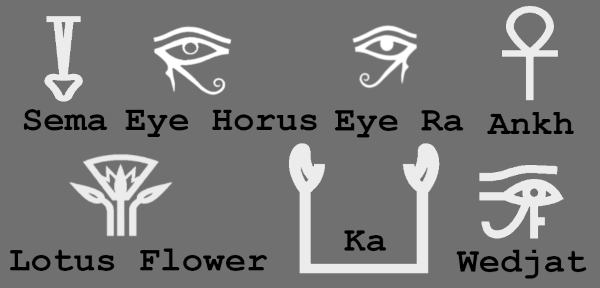
Seba: The Egyptian Seba symbol represents stars, divine guidance, learning, and the afterlife, symbolizing the souls of the dead joining heaven.
Eye of Horus: The Eye of Horus is primarily associated with the left direction. Ancient Egyptians painted the Eye of Horus on the bow of their ships before embarking on a dangerous voyage, this was used as a potent guide to protect the ship's travel in uncharted waters and prevent erosion from evil forces.
The Eye of Ra The Eye of Ra is typically the right eye, representing the sun, power, and wrathful protection, often depicted as a human eye with solar attributes, symbolizing the moon, healing, and restoration
Ankh: The Ankh, or "Key of Life," is an ancient Egyptian hieroglyph symbolizing eternal life, vitality, and breath, often shown held by gods to grant it to pharaohs, representing divine power, protection, and the promise of the afterlife.
Lotus Flower: the Lotus flower (Seshen) in ancient Egypt was a significant symbol strongly associated with love, beauty, purity, creation, and rebirth, often given as a token of affection, representing devotion and the regenerative power of life.
Ka: Life Force/Spiritual Double: The Ka is a fundamental aspect of the soul
The Egyptian symbol for Ka (representing life force or spiritual double).
Wedjat: Its role in resurrecting Osiris linked it to the afterlife and cyclical renewal.
The Wedjat Eye (or Eye of Horus/Udjat Eye) is a powerful ancient Egyptian symbol representing healing, protection, royal power, and rebirth.
|